In May, Sarawak Report cited sources which reported that the fraudster Jho Low had been involved in negotiations between Malaysia and China to resolve the thorny issue of a Belt & Road project that he had negotiated for his boss, former PM Najib Razak, in 2016: an upfront $2 billion loan from China had largely disappeared with payment still outstanding.
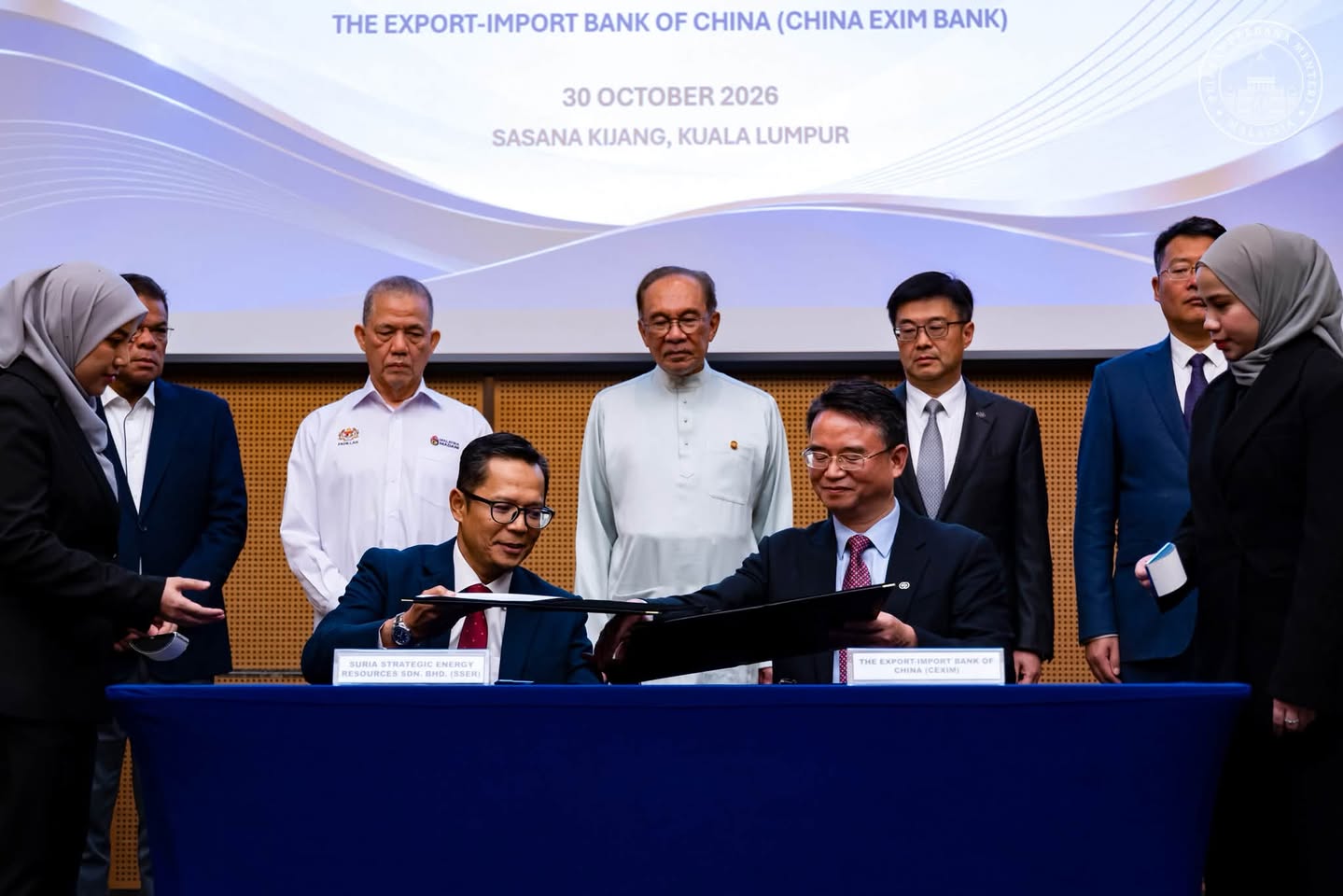
On Friday, the outcome of those negotiations seems to have been announced in the form of the mighty strange settlement which claims that Malaysia has apparently “recovered” RM5 billion out of the RM8 billion ($2 bn) loan, through an agreement to “repurpose” the missing money as a loan for a separate project.
No further details have been offered so far as to how such an outcome could have been arrived at, nor has there been any explanation as to where and how the missing RM5 billion was located and returned (or, indeed, what has become of the remaining RM3 billion). The official Malaysian announcement says only:
The signing of this agreement marks a significant achievement … in achieving a partial recovery on the [original RM8 billion] loan by repurposing RM5 billion to implement NPWSS [Northern Perak Water Supply Scheme]. Thus, reducing the losses arising from the TSGP and MPP projects and ensuring that RM5 billion can be utilised to develop essential infrastructure
The so-called trans-Sabah gas pipeline [TSGP] and Multi-purpose pipeline [MPP] contracts had been agreed with the Chinese authorities at the highest levels at the same time that Najib negotiated the terms of the notoriously inflated East Coast Rail Link (ECRL), which was likewise offered to China to build as a Belt & Road project using loans raised from China EXIM Bank.
Behind the scenes, as confirmed by later court hearings, these two projects were covertly designed to repay the debts owed by the Malaysian finance ministry-owned fund, 1MDB, through backhanders that the Chinese government had agreed the construction companies would pay in return for the inflated fees.
The ECRL contract was structured to repay the massive $7.5 billion directly owed by 1MDB itself (plus two of Jho Low’s own companies), whilst the pipelines were designated to pay the RM4 billion ($1 bn) owed by the 1MDB subsidiary SRC to the civil service pension fund KWAP.
What was particularly shocking about the pipeline arrangement was that Najib, by then desperate for cash, had further negotiated terms allowing for 88% of the contract to be paid up front by the the Minister of Finance incorporated company, Suria Strategic Energy Resources Sdn. Bhd., (SSER), without a yard of pipeline to show for the money.
China EXIM Bank duly coughed up the RM 7.81 billion (just shy of $2bn) in March-May 2017 to the Chinese government designated contractor, China Petroleum Pipeline (CPP), after which the money appeared to evaporate. When the Harapan Government raided CPP’s Malaysian bank account the following year it found only around $150 million, which it confiscated.
SSER was later fined RM18 million for breaking Bank Negara rules over such a ‘negligent’ contract involving foreign lenders.
At the time Harapan officials suspected the upfront pipeline money may have sourced at least some of the billion dollars passed by Chinese construction subsidiaries at the time to Kuwait, from where Jho Low laundered it back into paying 1MDB debts using the son of the then Kuwait prime minister, Sheikh Sabah Jaber Al-Mubarak, as a front.
However, the evidence shows the money flowed from subsidiaries of the ECRL contractor CCCC, leaving a long-standing mystery as to what happened to the best part of $2 billion that disappeared from the contract for the pipelines, which were left largely unbuilt. This was a loan on which Malaysia had contracted to pay the Chinese bank 3.5% per annum over 20 years, taking the total repayment due to over $3 billion.
Friday’s triumphant press release by the Madani government acknowledges the above facts, admitting that following the termination of the pipeline projects in 2018, “the Malaysian Government remained liable for the repayment of RM8 billion of related loans from CEXIM, even though the projects were not implemented.” And that “This remained unresolved despite efforts by the previous three administrations.”
However, the press release does not elaborate on how the RM5 billion was ‘recovered’ after all that time in order to be repurposed in this way.
Is this a way of saying that China has agreed to ‘take the hit’ on the stolen money as long as Malaysia agrees to borrow a further RM5 billion for another project – effectively wiping RM3 billion from what is owed?
Alternatively, is China funding the RM5 billion project as long as Malaysia pays back RM3 billion and interest? The convoluted wording offers no real answers and appears designed to confuse and disguise.
What is on record is that Malaysians have been given to understand for many years that the pipeline money was never employed to pay off SRC debt, as per the original secret intention. It was the incoming Harapan government that was landed with the bulk of the burden of repaying the KWAP pensioners. Therefore, the bulk of the proceeds of the loan was missing leaving that outstanding RM8 billion owed to China.
Sarawak Report suggests that behind Friday’s announcement has been a face-saving exercise at play, in keeping with the terms leaked to us in May as having been orchestrated by Jho Low. In short, that the agreement is a disguise to write off the bulk of Malaysia’s liability for this huge theft of public money by the country’s former kleptocrat PM, on the basis that the entire criminal scheme had been knowingly facilitated and camouflaged by the Chinese government.
Back in 2023 Abu Dhabi also agreed to reach a settlement, whereby its state-controlled IPIC fund paid 1MDB $1.8 billion compensation for very much the same apparent reason i.e. to close down discussion over the Gulf state’s embarrassing record of collusion in return for backhanders to top officials. In the case of China, the quid pro quo had been Najib’s compromising of Malaysia’s independence by connecting into the super-power’s Belt & Road initiative.
Now, thanks to Friday’s agreement, we have the proof of those secret negotiations, the cover-story being that China has allowed Malaysia to ‘re-deploy’ RM5 billion of the RM8 billion loan into another project – a water system in Perak. This time, one assumes, the money will be used to carry out the intended development work: yet if the original money were still available why would Malaysia have needed China’s permission and why would the negotiations have taken so many years?
One other ‘win’ from Malaysia’s point of view is the sidelining of Jho Low’s reported personal priority in the negotiations, which had been make the agreement conditional on a pardon from Malaysia for himself.
According to Sarawak Report’s sources, the fraudster had even entered KL under Chinese protection to supervise the talks last year in order to push a deal whereby both he and Sheikh Sabah would see the dropping of the charges against them.
At the very same time, of course, evidence leaked out from the United States about a simultaneous attempt by Jho to buy a US pardon using President Trump’s purported 250 Pardons List to celebrate the Independence Anniversary in July. This too was cancelled after word got out. However, at least one credible report suggested the Malaysian fraudster had offered up to $2 billion for his name to be on the list.
Could the missing pipeline money (now deemed ‘partially recovered’) have played a role in funding such an offer?
The full details of Jho’s China negotiations and pardon attempts are available in
THE CHINA CONTRACT
available online and in selected bookshops from November 12th